I’ve spent the better part of a decade analyzing mobile gaming funnels, and if there’s one thing I’ve learned, it’s this: players are impatient. When I’m testing a new casino product on a mid-range Android phone while tethered to a spotty 4G connection on the subway, I don’t care about your “next-gen cinematic experience.” I care about how many taps it takes to get from the homepage to a real dealer game, and whether the stream crashes when I hit “deposit.”
Lately, the data doesn’t lie. **Live casino growth** is outpacing slots, RNG table games, and virtual sports by a significant margin. But why? It’s not just the allure of a human dealer; it’s a fundamental shift in how mobile-first architecture is meeting infrastructure improvements.
The Death of the “App-First” Fallacy
One of my biggest pet peeves in the industry is when operators act like you *need* to download a 200MB app to get a premium experience. In the era of high-performance mobile browsers, that’s just friction. The transition to HTML5 instant play has been the single greatest catalyst for the explosion of **real dealer games** on mobile devices.
Back in the Flash/plugin era, trying to run a stream on a mobile device was a recipe for overheating and battery drain. Today, because these games run directly in the browser via HTML5, the “barrier to entry” has plummeted. I can open a session, play a round of Lightning Roulette, and close the tab without ever having to touch the App Store or Google Play. For the casual player, that ease of access is the gold standard.
Network Evolution: 4G and 5G as the Backbone
Let’s get technical for a second. I test everything on mobile data—never Wi-Fi. If a live stream buffers on 4G, it’s a failed product. But here is the reality of the current landscape:
- 4G Stability: While 5G gets all the headlines, 4G has matured enough to handle the low-latency requirements of live streaming. Most modern mobile casino platforms now employ “adaptive bitrate” streaming, which scales the video quality based on your current signal strength.
- The 5G Shift: 5G isn’t just about speed; it’s about capacity. In crowded environments (like a stadium or a busy commuter train), 5G prevents the “handshake” lag that used to ruin live dealer sessions.
When you combine that network reliability with optimized mobile layouts, the **mobile convenience** factor becomes undeniable. You aren’t just playing a game; you’re consuming a high-bandwidth media stream that now feels as reliable as a Netflix video.
Comparison: Mobile Web vs. Native App for Live Casino
In my audits, I often see operators pushing hard for app installs. I categorize the difference between a high-performing web flow and a forced app install in the table below:
Why Real Dealer Games Offer Better Retention
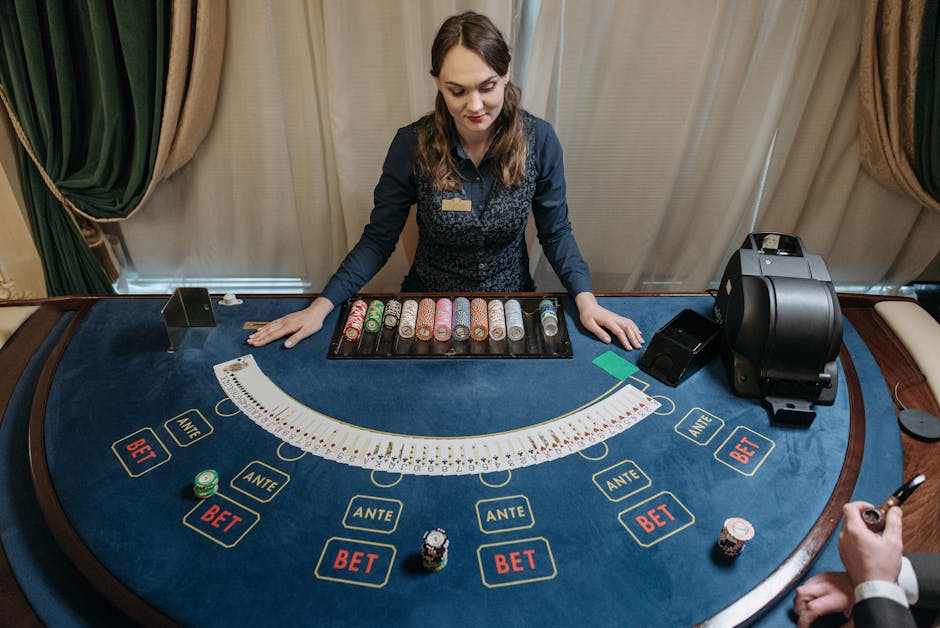
From a UX perspective, there’s a massive psychological difference between spinning an RNG slot and chatting with a human dealer. Slots feel like a solo, repetitive exercise. **Real dealer games** feel like a social event. For the mobile-only user—someone who might be playing during a lunch break or while waiting in a queue—that social interaction provides a sense of “time well spent” that a static game cannot replicate.
However, operators often fall into the trap of “vague claims.” They promise a “social atmosphere” but then hide the chat features behind a three-tap menu. If you’re building for mobile, your chat UI should be front-and-center, and your betting interface should be optimized for a thumb-reach pattern. If I have to rotate my phone to landscape just indiatimes.com to place a chip, you’ve already lost me.

The “Hidden” UX Problem: Safety Tools
I cannot stress this enough: **Never bury your safety tools.** I count the taps to deposit, and I count the taps to access a “Reality Check” or “Deposit Limit” feature. If it takes me four taps to deposit but six to access my responsible gaming settings, the UX is inherently predatory.
Live casino growth is great for business, but it requires more engagement than traditional slots. Because live games move at a set pace (unlike slots where the player controls the rhythm), players are more susceptible to losing track of time. A responsible UX design for mobile live casino must include:
Final Thoughts: The Future is Small-Screen
The **live casino growth** we are seeing isn’t a fluke. It is a direct result of the industry finally aligning with the reality of how people use their phones. We are no longer tethered to desktops, and we are no longer waiting for fiber-optic internet to get a clear image of a roulette wheel.
If you are an operator or a developer looking to win in this space, stop overpromising on bonuses with unreadable terms. Stop forcing app downloads that don’t add value. Focus on the mobile-first baseline: speed, stability, and respecting the player’s time. When your game loads in five seconds on a 4G connection and the interface is intuitive enough to use with one hand, that’s when you’ve built a product that actually deserves the user’s attention.